
DOT physical urinalysis checks a driver’s urine for sugar, protein, blood, and specific gravity as part of the medical exam. It is not the same as a DOT drug test. Tampa commercial drivers usually provide the sample during their appointment so the medical examiner can identify health concerns that may affect safe driving.
Schedule your DOT physical with Med A Physical and arrive prepared for the required urine screening.
That distinction matters when your medical card renewal is approaching. A driver may need a routine urine screening during a DOT exam, a separate drug test under an employer or federal testing program, or both. Knowing what each test does can reduce unnecessary worry and help you plan a smoother visit in Tampa Bay.
What does DOT physical urinalysis test for?
During a DOT physical, urinalysis checks four health indicators: sugar, protein, blood, and specific gravity. The medical examiner uses those findings with the rest of the exam to assess whether a health condition could interfere with safe commercial driving. The routine screening does not test for controlled substances.
The urine sample provides a quick view of several body systems. Sugar in urine may prompt the examiner to ask about diabetes or blood-glucose control. Protein or blood may point to a possible kidney, urinary tract, or other medical concern. Specific gravity shows how concentrated or diluted the urine is, which gives context for the other findings.
An unexpected result does not automatically mean that a driver fails the exam. It gives the certified medical examiner a reason to ask follow-up questions, review medical records, or recommend evaluation by the driver’s regular clinician. The final certification decision considers the full exam and the standards that apply to the driver.
The FMCSA Medical Examiner’s Handbook explains the medical-exam process and the examiner’s role. A general urinalysis overview from Mayo Clinic provides additional context about what urine findings can indicate, but your certified examiner interprets your result for DOT certification.
- Sugar: may lead to questions about diabetes and blood-glucose management.
- Protein: may suggest that kidney function or another condition needs review.
- Blood: may call for follow-up to identify the cause.
- Specific gravity: helps show how concentrated or diluted the sample is.
Is DOT physical urinalysis a drug test?
No. The urine screening required during a DOT physical is a medical screening, not a drug test. A DOT drug test is a separate procedure conducted under a qualifying testing event, with its own collection controls, laboratory analysis, and result-review process.
The confusion is understandable because both procedures can use urine. The purpose, rules, handling, and results are different. During the physical, the examiner is looking for health indicators relevant to medical qualification. During a regulated drug test, the collection and laboratory process looks for specific controlled substances and follows federal chain-of-custody requirements.
FMCSA directly addresses whether a urine sample collected during a physical may also be used for controlled-substance testing. The agency explains that it may be used only when the collection follows the applicable drug-testing requirements. In practice, drivers should not assume that the routine urine cup for the medical exam also satisfies a required drug test.
| Feature | DOT physical urinalysis | DOT drug test |
|---|---|---|
| Purpose | Check health indicators | Screen for controlled substances |
| What it checks | Sugar, protein, blood, and specific gravity | Substances included in the required DOT testing panel |
| Timing | During the DOT medical examination | After a qualifying testing event |
| Process | Interpreted by the medical examiner | Regulated collection and laboratory review |
| Result | Informs medical certification | Reported through the testing program |
Drivers and employers who need a separate screening can review Med A Physical’s drug and alcohol testing services. The U.S. Department of Transportation also publishes the detailed procedures in 49 CFR Part 40.
What should Tampa drivers expect during the urine test?
Most drivers provide a small urine sample during the DOT physical appointment. The medical examiner or clinic staff explains where to collect it and then performs the routine medical screening. The process is usually brief, private, and completed alongside vision, hearing, blood-pressure, and physical-exam checks.
Follow the clinic’s directions and ask questions if anything is unclear. For the routine medical screening, you generally do not need to treat the visit like a regulated drug-test collection. If a separate drug test has also been ordered, staff should explain that process and its additional requirements.
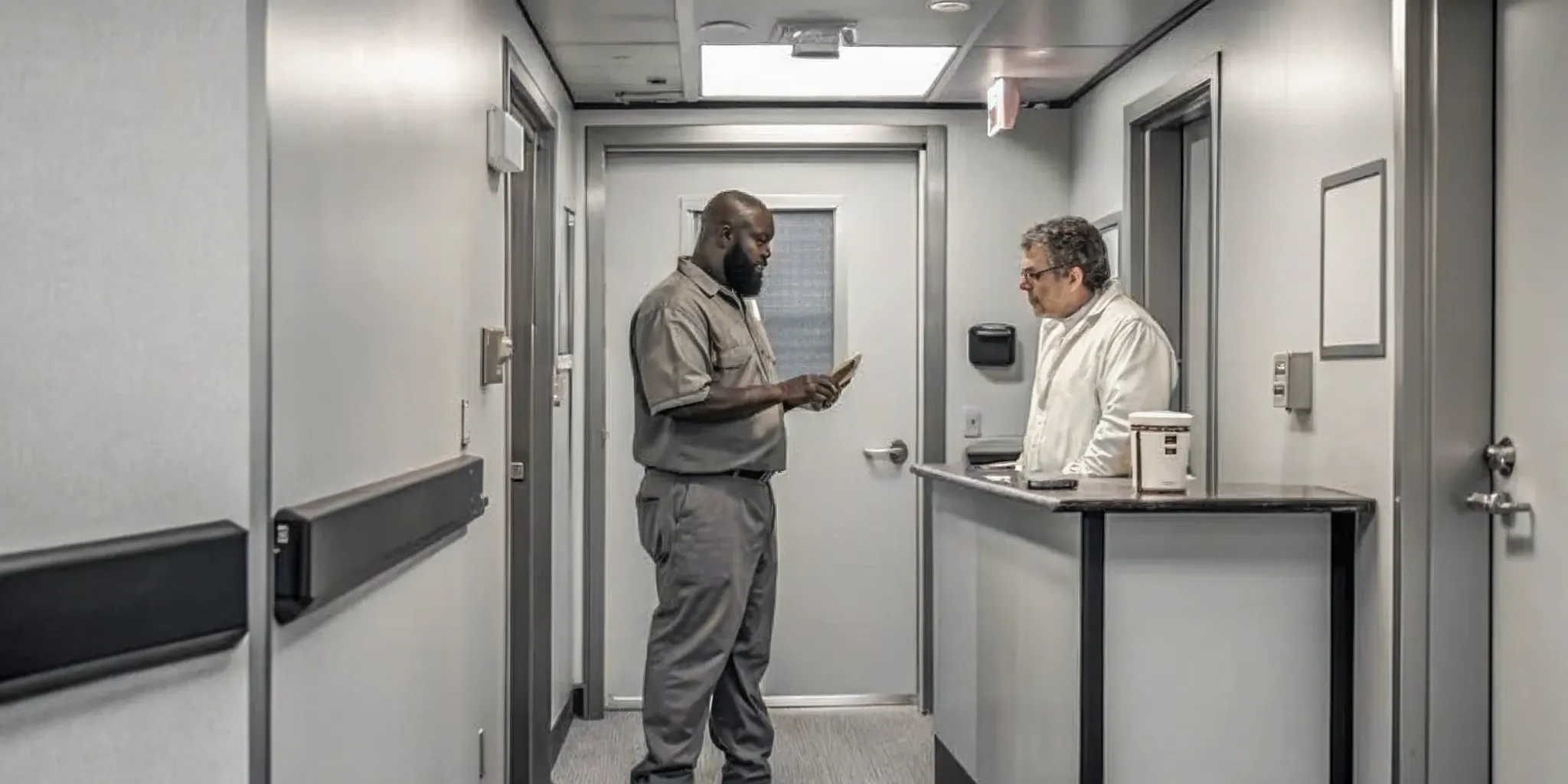
Once the screening is complete, the examiner reviews the result with the other parts of your medical history and exam. Normal findings usually require no extra action. If a result needs clarification, the examiner may ask about symptoms, prescriptions, recent activity, hydration, or existing diagnoses.
What the urine screening does not replace
The sample does not replace the complete DOT physical. Drivers should still expect the examiner to review medical history and assess the areas required for certification. If you want a broader appointment overview, read what to expect during a DOT physical examination.
When both tests are scheduled
Tell clinic staff if your employer sent paperwork for a drug test in addition to the physical. That helps the team confirm which services have been ordered. It also prevents a driver from leaving after the physical while mistakenly believing a separate employer-required test was completed.
How should you prepare for DOT physical urinalysis?
Prepare by drinking your normal amount of water, bringing an accurate medication list, and gathering records for conditions that may affect certification. Avoid extreme overhydration. Tell the examiner about relevant diagnoses and prescriptions so the result can be interpreted with the rest of your medical history.
You need to be able to provide a sample, but trying to force the issue by drinking an excessive amount of water can create an unusually diluted sample. A better approach is to maintain your ordinary routine unless your clinician has given different medical instructions.
- Confirm the appointment requirements. Ask whether you are scheduled for a DOT physical only or for a separate drug test too.
- Bring identification and requested forms. Include employer paperwork if your company provided it.
- List your medications accurately. Include prescription medicines and relevant over-the-counter products.
- Gather supporting records. Bring documentation your medical examiner may need for an ongoing condition.
- Drink water normally. Arrive able to provide a sample without intentionally overhydrating.
- Ask before changing medication. Never stop or alter prescribed treatment solely to prepare for the exam unless the prescribing clinician directs you to do so.
Tampa traffic and work schedules can add stress to an appointment day. Leave enough travel time, especially if you are coming from Town N Country, Westchase, Carrollwood, or elsewhere in Hillsborough County. Rushing in late can make a straightforward visit feel harder than it needs to be.
Review the DOT medical card renewal guide for Tampa drivers before your certification deadline.
What happens if the urine screening is abnormal?
An abnormal screening result does not automatically disqualify a driver. The certified medical examiner considers the finding, medical history, symptoms, and other exam results. The examiner may request records, recommend follow-up testing, or issue a certification decision based on the complete clinical picture and applicable standards.
For example, a finding may be temporary or may reflect a known condition that is already being managed. The examiner’s job is not to diagnose every possible cause from one screening result. The examiner must decide whether enough information is available to make a responsible medical-certification determination.
Answer follow-up questions honestly and provide requested documentation promptly. If the examiner asks you to see your regular clinician, ask what records or test results should come back to the medical-exam office. Clear instructions can help prevent unnecessary delays.
Do not assume the cause
Urine findings can have more than one explanation. Avoid self-diagnosing from a single result or making medication changes on your own. Follow the examiner’s guidance and work with your treating clinician when further evaluation is appropriate.
Plan ahead for renewals
If you have a known condition, scheduling before your medical card expires gives you more time to gather records. Drivers who wait until the last day have less flexibility if the examiner needs additional information. Early planning is especially helpful for busy Tampa Bay drivers whose routes or shifts make follow-up visits difficult.
When might a separate DOT drug test apply?
A separate DOT drug test may apply for pre-employment, random selection, post-accident, reasonable suspicion, return-to-duty, or follow-up testing. The employer or testing program determines when the regulated test is required. Passing the medical exam’s urine screening does not satisfy a separate drug-testing obligation.
Commercial drivers should follow the instructions provided by their employer, consortium, or testing program. Regulated testing uses specific paperwork and collection procedures. It also includes laboratory analysis and a formal review process rather than the quick medical indicators checked during the physical.
- Pre-employment: commonly required before performing safety-sensitive duties for a new employer.
- Random: required when a driver is selected through the applicable random-testing program.
- Post-accident: may apply after qualifying accidents under DOT rules.
- Reasonable suspicion: may be required when trained employer representatives identify qualifying signs.
- Return-to-duty and follow-up: apply in defined circumstances after a violation and completion of required steps.
Employers managing Tampa drug testing programs can read about DOT drug testing requirements for Tampa employers. Drivers who receive a test order should complete the exact service requested and ask their employer if the paperwork is unclear.
How can you make your Tampa DOT physical smoother?
A smooth DOT physical starts with three checks: confirm every service ordered, bring complete medical information, and schedule before your deadline. Understanding the difference between medical urinalysis and drug testing helps you avoid missed requirements and gives the examiner the information needed to assess your certification.
Before leaving your appointment, confirm whether any follow-up is needed and ask when to expect documentation. If your employer ordered a second service, verify that it was completed. Keep copies of relevant records where you can access them for future renewals.
Med A Physical serves commercial drivers in Tampa and nearby communities with DOT physicals and occupational health services. The goal of the medical exam is to evaluate safe-driving fitness under the applicable standards, while giving drivers clear next steps when a health finding needs attention.
Book your Tampa DOT physical or call (813) 639-9119 to ask about appointment availability and required services.
Frequently asked questions about DOT physical urinalysis
Does DOT physical urinalysis look for drugs?
No. Routine DOT physical urinalysis checks medical indicators such as sugar, protein, blood, and specific gravity. A DOT drug test is separate and follows regulated collection, laboratory, and review procedures.
Can I fail a DOT physical because of an abnormal urine result?
An abnormal result does not automatically mean failure. The certified medical examiner considers the finding with your medical history and complete exam. The examiner may ask for records or further evaluation before making a certification decision.
Should I drink lots of water before my DOT physical?
Drink your normal amount so you can provide a sample, but avoid deliberately overhydrating. Excess water can produce an unusually diluted sample. Follow any personal medical instructions from your treating clinician.
Can the same sample be used for a DOT physical and drug test?
A sample may be used for controlled-substance testing only when the regulated drug-testing requirements are followed. Do not assume the routine physical sample completes a separately required drug test. Confirm the ordered services with the clinic and your employer.
What should I bring to a DOT physical in Tampa?
Bring identification, requested employer forms, an accurate medication list, and records relevant to ongoing medical conditions. Confirm in advance whether the appointment includes only the physical or also a separate drug test.
Schedule your DOT physical urinalysis in Tampa
Understanding the urine screening before your visit removes a common source of confusion. Med A Physical can help Tampa Bay commercial drivers complete a DOT physical and understand when a separate drug-testing service applies.
Schedule your DOT physical with Med A Physical or call (813) 639-9119 to get started.